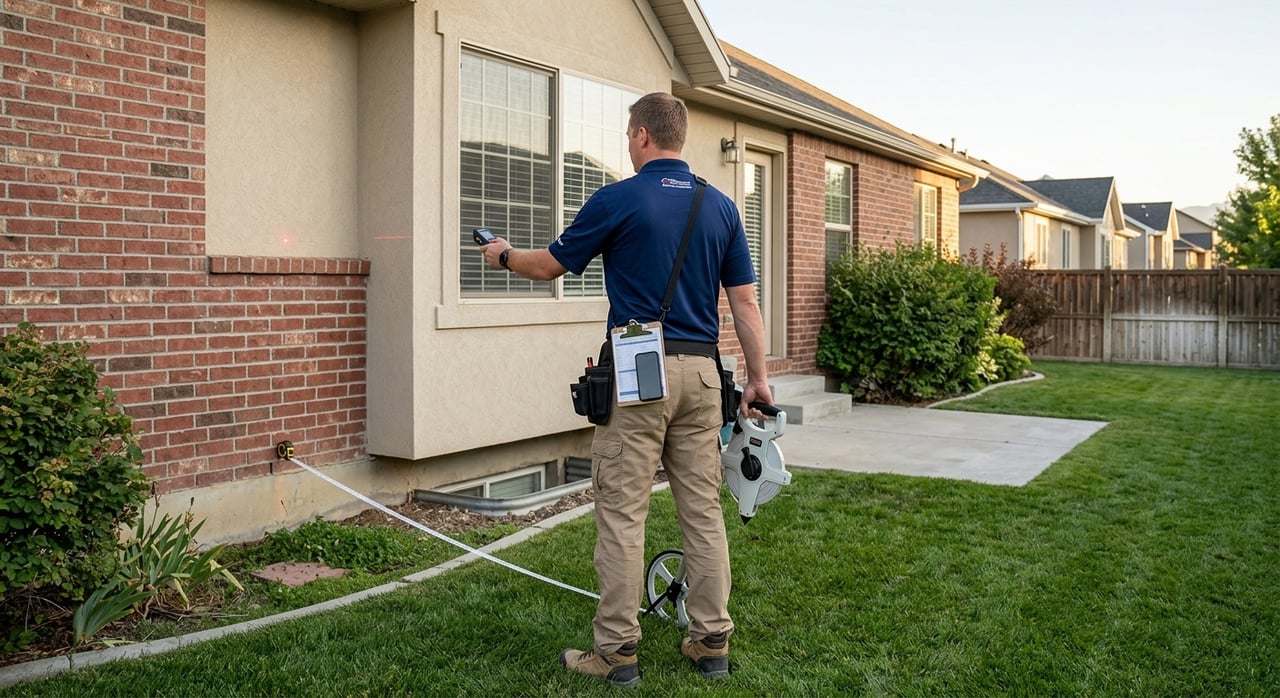
If a home appraises below the contract price in Utah, the buyer's lender will base the loan on the lower appraised value, not the purchase price. That means the buyer either brings more cash to closing, renegotiates the price with the seller, or cancels the contract. If the buyer's Utah Real Estate Purchase Contract (REPC) includes the appraisal condition and they cancel in writing by the Financing and Appraisal Deadline, they can generally get their earnest money back.
A low appraisal is one of the most stressful moments in a transaction, mostly because it comes as a surprise. It shouldn't. If you understand how it works before you write your offer, you'll know exactly what your options are if it happens.
Why Appraisals Matter to Your Loan
Your lender orders an appraisal to make sure the home is worth what they're lending against. The loan amount is based on the lower of the purchase price or the appraised value.
Here's what that looks like with real numbers. Say you're under contract at $550,000 with 20% down. You planned to bring $110,000 and borrow $440,000.
The appraisal comes back at $530,000. Your lender will now lend 80% of $530,000, which is $424,000. To close at $550,000, you'd need $126,000 in cash, which is $16,000 more than you planned, before closing costs. Many buyers don't have that sitting in an account, which is why the negotiation that follows matters.
The Appraisal Condition in the Utah REPC
The Utah REPC lets the buyer choose whether their purchase is conditioned on the home appraising for at least the purchase price. If the appraisal condition applies and the home appraises low, you can cancel by giving written notice to the seller no later than the Financing and Appraisal Deadline, and your earnest money is generally returned to you.
Two details matter most here.
The deadline is real. If the appraisal comes in low and you don't act before the Financing and Appraisal Deadline, you may lose the right to cancel on that basis and put your earnest money at risk. Know the date and keep track of when the appraisal is ordered.
Waiving the condition is a real risk. In competitive situations, some buyers waive the appraisal condition or add language committing to cover a gap. That can make an offer stronger, but only commit to an amount you actually have in cash. If you'd have to back out because you can't cover the difference, your earnest money is on the line.
Your Options If the Appraisal Comes in Low
Ask the seller to lower the price. This is the most common outcome. The seller knows that any other buyer's lender will likely see the same appraisal, so many agree to reduce the price to the appraised value or close to it.
Split the difference. On a $20,000 gap, you might agree to a $10,000 price reduction and cover the remaining $10,000 yourself. This keeps the deal together when neither side wants to absorb the whole gap.
Cover the gap in cash. If you love the home and have the funds, you can pay the difference. Just know you're paying more than the appraiser thinks the home is worth today.
Challenge the appraisal. Your lender can request a reconsideration of value if the appraiser missed relevant comparable sales or made a factual error, like the wrong square footage or bedroom count. Your agent can help pull comps that support a higher value. These don't always succeed, but they're worth trying when there's a clear error.
Cancel. If the appraisal condition applies and you're within the deadline, walking away is a legitimate option. Sometimes it's the right one.
One thing that usually doesn't work is asking the seller for more concessions instead of a lower price. Lenders cap how much a seller can contribute based on your loan type and down payment, and concessions don't change the appraised value.
FHA and VA Loans Have Extra Protection
If you're using an FHA loan, a required federal amendatory clause lets you out of the contract without losing your earnest money if the home appraises below the purchase price, unless you choose to proceed anyway. VA loans include a similar escape clause. For more on these programs, see our guide to first-time buyer programs in Utah.
FHA and VA appraisals also check that the home meets property condition standards. If the appraiser flags something like peeling paint on an older home or a missing handrail, it may need to be fixed before closing, even if the value comes in fine.
Where Low Appraisals Are Most Likely Right Now
Appraisals look backward at closed sales. When buyers pay at or above list, prices can get ahead of the comps the appraiser has to work with.
In August 2026, the median home sold at or above list in American Fork, Eagle Mountain, Lehi, Payson, Provo and Springville. If you win a home in one of those cities after competing with other buyers, plan for the possibility of a gap. In slower cities like Mapleton, Alpine and Lindon, where homes sold below list in August, low appraisals are less common because buyers are already negotiating below asking.
How to Protect Yourself Before You Make an Offer
Look at the comps before you write the offer, not after the appraisal. If similar homes closed around $530,000, offering $550,000 means you're betting the appraiser will see something those sales don't show. Our guide on making a competitive offer without overpaying walks through how to use comps to set your number.
Keep a cash cushion if you're competing. If you're in a multiple-offer situation in a fast city, know how much of a gap you could cover before you agree to cover one.
Ask your lender early about timing. The sooner the appraisal is ordered, the more room you have before the Financing and Appraisal Deadline to negotiate or request a reconsideration.
If you're getting ready to buy and want help reading the comps on a specific home, reach out to our team.
Frequently Asked Questions
What happens if a house appraises for less than the offer in Utah?
The lender bases the loan on the lower appraised value. The buyer can renegotiate with the seller, cover the difference in cash, split the gap, challenge the appraisal, or cancel. If the REPC's appraisal condition applies, the buyer can generally cancel and recover their earnest money by giving written notice before the Financing and Appraisal Deadline.Do I lose my earnest money if the home doesn't appraise?
Not if your contract includes the appraisal condition and you cancel in writing before the Financing and Appraisal Deadline. If you waived the condition, or miss the deadline, your earnest money may be at risk.Can a seller refuse to lower the price after a low appraisal?
Yes. The seller isn't required to reduce the price. But if they refuse and you cancel under the appraisal condition, they'll likely face the same appraisal issue with the next buyer, so many sellers choose to negotiate.How much extra cash do I need if the appraisal is low?
It depends on your down payment and the size of the gap. On a $550,000 contract with 20% down, a $530,000 appraisal would raise the cash needed from $110,000 to $126,000 before closing costs, an extra $16,000.Can I dispute a low appraisal?
Yes. Your lender can request a reconsideration of value if the appraiser missed relevant comparable sales or made a factual error, such as incorrect square footage. Supporting comps from your agent strengthen the request.Do FHA loans protect buyers from low appraisals?
Yes. FHA loans include a required amendatory clause that lets the buyer cancel without losing earnest money if the home appraises below the purchase price. VA loans have a similar escape clause.Are low appraisals common in Utah County right now?
They're most likely in cities where homes are selling at or above list. In August 2026, that included American Fork, Eagle Mountain, Lehi, Payson, Provo and Springville. In cities where homes sold below list, such as Mapleton and Alpine, they're less common.
This article is for general informational purposes only and reflects publicly available information at the time of writing. It is not legal, tax, or financial advice. Market data, development proposals, and city decisions can change, so confirm current information with relevant sources and consult qualified professionals for advice specific to your situation.