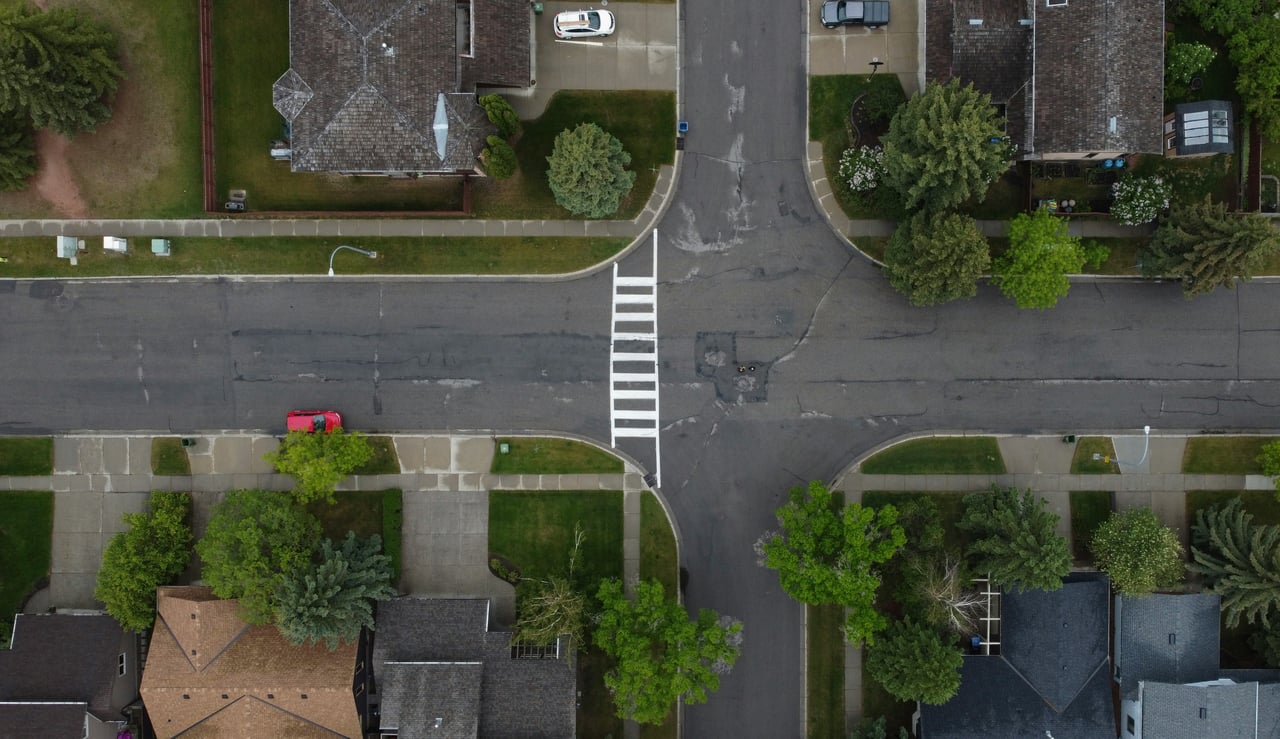
When most people buy a home, they fall in love with the house. The kitchen, the backyard, the light in the morning. That's real and it matters. But the home you're buying is attached to a neighborhood, and that neighborhood is going to change, with or without your input, for better or for worse.
The families who feel best about their purchase five years later are almost always the ones who asked different questions before they signed. Not just "is this a good neighborhood?" but "where is this neighborhood going?"
Here's how we help our clients read that.
Look at what's already been approved, not just what exists
Most buyers look at what a neighborhood looks like today. Smart buyers look at what's already been entitled and approved to be built. In Utah County, the planning and zoning departments publish records of pending developments, rezoning applications, and infrastructure projects. This is public information, but it takes someone who knows where to look.
Before you buy, ask us to check for approved developments within a half-mile radius. A field next door might already have 200 townhomes permitted. A "quiet road" might be designated for a future connector highway. These aren't surprises if you know where to look.
Watch where infrastructure is going
Roads, utilities, and public transit don't follow neighborhoods; neighborhoods follow them. In fast-growing areas like Lehi, Eagle Mountain, and Salem, infrastructure investment is one of the clearest signals of where growth is headed.
Things worth tracking: new freeway on-ramps and road widening, water and sewer extensions, school boundary changes, and planned commercial corridors. If the city is investing in infrastructure in a neighborhood, private development almost always follows.
Understand the municipality's general plan
Every city in Utah County has a general plan; a long-range document that lays out how the city envisions its own growth over 10 to 20 years. It's not legally binding, but it's a serious signal. Areas designated for high-density residential or commercial mixed-use in a general plan tend to become exactly that.
If you're buying in Provo, Orem, Lehi, or Springville, we'd encourage you to spend 20 minutes with the general plan map for that city before you close. It's not glamorous reading, but it tells you a lot about what the city is planning to build around you.
Pay attention to the businesses moving in
Retail follows rooftops, but quality retail also signals neighborhood trajectory. When locally-owned restaurants, boutique fitness studios, and specialty coffee shops start appearing in an area, it's a reliable indicator of rising desirability and income levels. Conversely, a proliferation of payday loan shops and dollar stores tends to signal the opposite trend.
This isn't a perfect science, but it's a real pattern. Walk the nearest commercial strip, note what's opening and what's closing, and ask your agent what the area looked like three years ago.
Talk to people who've lived there a long time
No data source beats a 20-year resident. Long-time neighbors know things about a street, a development, or a city council's priorities that won't appear in any public record. If you're seriously considering a neighborhood, knock on a door or two before you buy. Ask what's changed, what they love, what frustrates them, and whether they'd buy there again.
Most people are remarkably candid when asked directly.
The bottom line
Buying a home is one of the most significant financial decisions you'll make. The neighborhood you buy into is just as important as the home itself, and unlike the home, you can't renovate it. The good news is that neighborhood trajectory isn't mysterious. It's readable, if you know what to look for.
Our agents spend a lot of time helping clients read it. If you want to talk through a specific neighborhood you're considering in Utah County, reach out to Foundry Group. We're always happy to pull the data and share what we're seeing on the ground.
FAQ
How do I find out what's been approved to be built near a home I'm considering in Utah County?
Utah County city and county planning departments publish pending development applications, rezoning requests, and infrastructure projects online. This is public record, but knowing where to look and how to interpret it takes experience.
What is a general plan and why does it matter when buying a home?
A general plan is a long-range document each city produces that outlines how it intends to grow over the next 10 to 20 years. It covers land use, density, transportation, and development priorities. It's not legally binding, but areas flagged for high-density or commercial development in a general plan tend to become exactly that over time. Checking the general plan for Provo, Lehi, Orem, or any city you're buying in takes about 20 minutes and can tell you a lot about what's coming.
What kinds of businesses signal a neighborhood is improving?
Locally-owned restaurants, boutique gyms, specialty coffee shops, and independent retail tend to appear in neighborhoods where income levels and desirability are rising. These businesses follow customers with disposable income. The inverse is also true: a high concentration of payday loan shops, dollar stores, and vacant storefronts tends to signal a different trajectory. Neither pattern is absolute, but both are worth noting when you walk the nearest commercial corridor before buying.
Should I talk to neighbors before buying a home?
Yes. Long-time residents know things about a street, a neighborhood association, a city council's priorities, and a developer's track record that won't appear in any database. Knocking on a door or two before you close is one of the highest-value, lowest-cost things a buyer can do. Most people are willing to share their honest experience when asked directly.
What infrastructure changes should buyers watch for in Utah County?
New freeway interchanges and road widening are the clearest signals. Water and sewer line extensions indicate where the county is enabling future density. School boundary changes can shift demand significantly within a city. Planned commercial corridors often precede significant residential development within a few years. We track these across Utah County as part of how we advise buyers on which areas have the strongest long-term trajectory.
How far out should I be looking when evaluating a neighborhood's potential?
We typically look at a 10-year horizon, which aligns with how most families think about their next move. Within that window, approved developments, general plan designations, and infrastructure investments give a reasonably clear picture of where a neighborhood is heading. Beyond 10 years, too many variables change for any projection to be reliable.