As of October 2026, Utah homeowners insurance premiums are up 59% since 2021, according to the Utah Office of the Legislative Fiscal Analyst, so insurance takes a bigger bite of your monthly payment than it used to. If you’re planning to buy, here’s a simple habit we encourage our Buyers to do: call your insurance agent early, tell them the price range and the area you’re looking in, and ask for a ballpark premium. It isn’t a formal quote, and you don’t need an address yet. It just means the payment you’re budgeting includes a realistic insurance number, so the closing figures from your lender don’t catch you off guard.
Most buyers focus on the rate and the price, and insurance gets handled in the last couple of weeks. That works until the number comes in higher than expected. A short conversation now avoids that.
Why It’s Worth a Call Early
Utah’s insurance costs have climbed faster than almost anywhere. KSL reported in April 2026 that LendingTree data showed Utah’s home insurance costs rose nearly six times faster than incomes from 2020 through 2024, the second-widest gap in the country. The reasons include more severe wind and hail, higher rebuilding costs, and homes being built in areas exposed to wildfire. We covered the wildfire side in our post on Utah’s wildfire law and what it means for your insurance.
None of this means you shouldn’t buy. It means insurance deserves a line of its own in your budget, not a guess.
What to Tell Your Insurance Agent
You don’t need a specific house. A few details are enough to get a useful ballpark:
The price range you’re shopping in.
The city or cities you’re considering.
The type of home, such as a single-family home, townhome or condo.
The rough age and size of the homes you’re looking at.
Then ask what the ballpark premium looks like, what drives it, and how it changes with the deductible. If you already have a policy with an agent for your car or your rental, that’s an easy place to start.
A Ballpark Isn’t a Quote
Your insurance agent can give you a range. The actual premium depends on the specific home, including its age, the roof, its claims history, how far it sits from the foothills, and how much it would cost to rebuild. Two houses at the same price can come back with different numbers.
So treat the ballpark as a planning number. Once you’re under contract on a specific home, you’ll get a real quote and a policy, which your lender will need.
What a Standard Policy Leaves Out
The Utah Insurance Department notes that flood and earthquake damage aren’t covered by a typical homeowners policy. That matters here, on the Wasatch Front.
For earthquake coverage, the department suggests starting with your current homeowners agent, since it’s usually an add-on or a separate policy. Flood insurance is available through the National Flood Insurance Program, and the department says to buy it before a flood happens, because policies typically take about 30 days to go into effect.
Ask your agent about both while you’re talking. You don’t have to buy either, but you should know what they’d cost and what you’d be choosing to go without.
Where Premiums May Run Higher
Homes closer to the foothills and canyons are where wildfire risk matters most, and that can affect both the price and the choice of carriers. In our wildfire insurance post, we looked at which Utah County areas are most affected. If you’re considering a home near the benches or a canyon, mention it when you call.
How It Fits Your Monthly Payment
If you have a mortgage escrow account, your lender will usually collect insurance each month with property taxes. In our post on renting vs. buying in Utah County, we used a rough placeholder for insurance. Your agent’s ballpark replaces that placeholder with something real. Our guide to how to know if you can actually afford your next home walks through the rest of the payment.
Timing at Closing
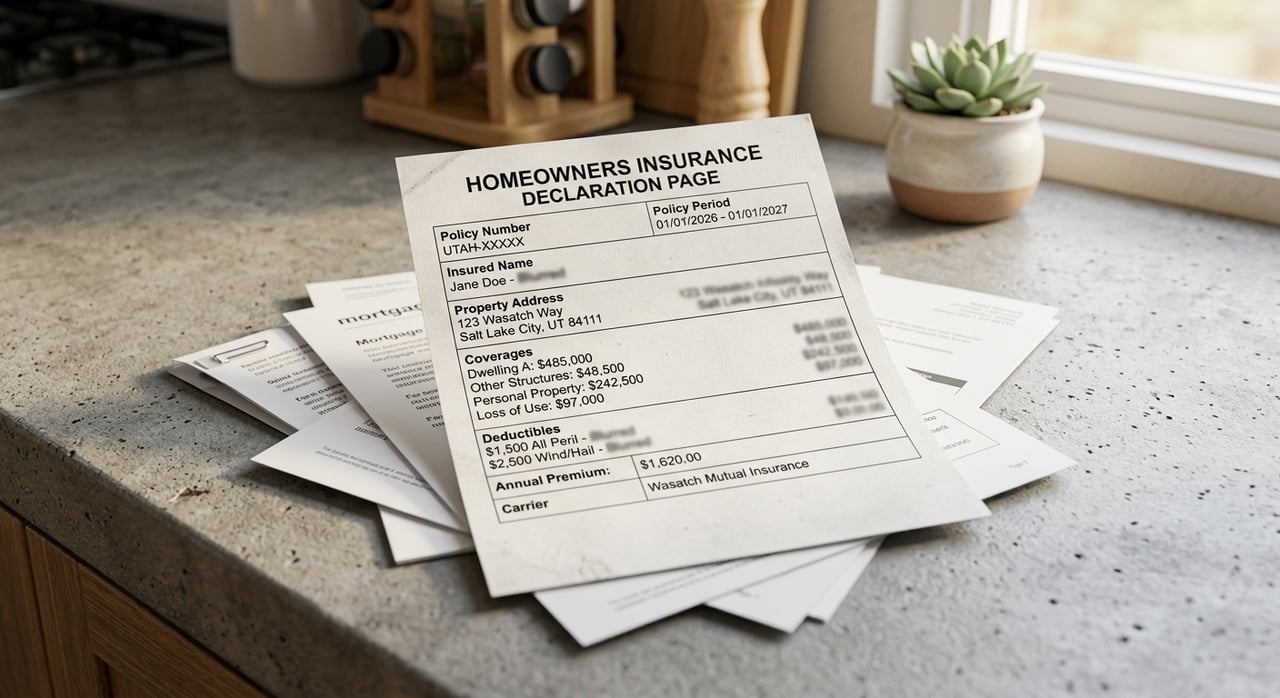
Your lender will require proof of coverage before closing, usually a binder or declarations page. How early they want it varies, from a few days to a couple of weeks. Ask your lender when they need it, and ask your agent how long it takes to set up, so you’re not rushing in the final week. Lenders also set minimum coverage amounts, generally enough to rebuild the home, and they can reject a policy that doesn’t meet their rules.
If the Number Is Higher Than You Expected
That’s useful information, and it’s better to learn it now than at closing. You can compare carriers, ask how a higher deductible changes the premium (and what you’d pay out of pocket in a claim), and ask about discounts. You can also adjust your price range or your list of cities. A home that looks affordable on price alone can cost more every month than one that’s a bit cheaper to insure.
We’re not insurance agents, so for specifics, talk with a licensed agent. If you’re sorting out your budget and want a second set of eyes, reach out to our team.
Frequently Asked Questions
Do I need homeowners insurance to buy a home in Utah?
Utah law doesn’t require it, but if you’re financing with a mortgage, your lender will require it, and you’ll need to show proof of coverage before closing.
When should I talk to an insurance agent when buying a home?
Early is easiest. Once you know your price range and the areas you’re considering, a call to your agent can give you a ballpark premium. You’ll need a policy in place for the specific home before closing.
Can an agent give me a ballpark before I’ve picked a home?
Often, yes. Many agents can give a rough range from a price range, city and type of home. The final premium depends on the specific property, so treat it as a planning number.
How much have Utah homeowners insurance premiums gone up?
According to the Utah Office of the Legislative Fiscal Analyst, premiums in the state have risen 59% since 2021. LendingTree data reported by KSL in April 2026 showed Utah’s insurance costs rose nearly six times faster than incomes from 2020 through 2024.
Does homeowners insurance cover earthquakes and floods in Utah?
Not in a typical policy, according to the Utah Insurance Department. Earthquake coverage is usually an add-on or separate policy, and flood insurance is available through the National Flood Insurance Program, with a waiting period of about 30 days.
Will homeowners insurance be part of my monthly mortgage payment?
Often, yes. Many lenders collect insurance through an escrow account, dividing the annual premium into monthly payments along with property taxes.
Why might insurance cost more near the foothills?
Wildfire exposure is a major factor in how insurers price homes near foothills and canyons, and it can affect which carriers will write a policy. Mention the area when you talk to your agent.
Citation sources below:
https://beinsure.com/news/utah-home-insurance-premiums-rise-as-wildfire-risk-grows/
https://www.ksl.com/article/news/features/family/home-insurance-premiums-in-utah-rising-at-a-troubling-rate/51486481
https://insurance.utah.gov/consumers/disaster-preparedness/
https://www.libertymutual.com/insurance-resources/property/when-to-buy-homeowners-insurance
https://www.insurance.com/how-much-home-insurance-does-lender-require
This article is for general informational purposes only and reflects publicly available information at the time of writing. It is not legal, tax, or financial advice. Market data, development proposals, and city decisions can change, so confirm current information with relevant sources and consult qualified professionals for advice specific to your situation.